
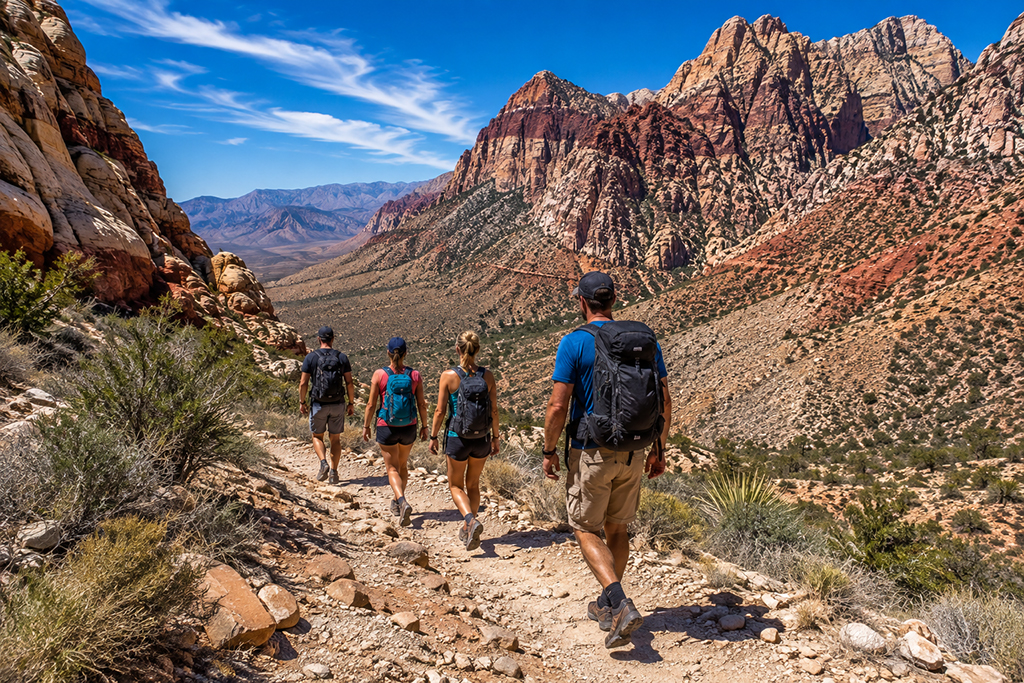
Nevada is an incredible place to hike. From the red-rock formations of Valley of Fire and the rugged canyons of Red Rock Canyon to the alpine trails surrounding Lake Tahoe and the high-elevation landscapes of Great Basin National Park, the Silver State offers trails for nearly every type of adventurer.
But Nevada hiking comes with its own challenges. Extreme heat, rapidly changing weather, limited water, rugged terrain, and remote locations can turn an enjoyable outing into a serious situation if you’re not prepared.
Whether you’re planning a short desert walk, a mountain trek, or a full-day backcountry adventure, knowing what to do—and what to avoid—can make all the difference.
Here are some essential do’s and don’ts for hiking in Nevada to help you explore safely, responsibly, and confidently.
DO: Know Where You’re Going
Nevada’s trails range from easy, well-marked walks to remote routes through rugged desert and mountain terrain. Before you leave, know your route, distance, elevation, difficulty, and expected hiking time. Check an official trail map or land-management website for current information, and let someone know where you’re going—especially if you’re heading into a remote area.
DO: Check the Weather and Trail Conditions
Nevada weather can change quickly, particularly in the mountains and high desert. Check the forecast before you leave and look for heat advisories, thunderstorms, snow, wind, or other conditions that could affect your hike. Trail conditions can also change with the seasons, so check current information before heading out.
DO: Know Where You’re Going
Nevada’s trails range from easy, well-marked walks to remote routes through rugged desert and mountain terrain. Before you leave, know your route, distance, elevation, difficulty, and expected hiking time. Check an official trail map or land-management website for current information, and let someone know where you’re going—especially if you’re heading into a remote area.
DO: Check the Weather and Trail Conditions
Nevada weather can change quickly, particularly in the mountains and high desert. Check the forecast before you leave and look for heat advisories, thunderstorms, snow, wind, or other conditions that could affect your hike. Trail conditions can also change with the seasons, so check current information before heading out.
DO: Carry Plenty of Water
Water is one of the most important things to carry when hiking in Nevada. Desert trails can become dangerously hot, even when temperatures feel comfortable at the trailhead. Bring more water than you think you’ll need, and consider carrying electrolytes for longer hikes. Never assume a natural water source will be safe or available.
DO: Dress for Nevada’s Terrain
Wear sturdy footwear and clothing appropriate for the terrain and season. Sun protection is essential on exposed trails, so bring a hat, sunglasses, and sunscreen. In higher elevations, temperatures can be significantly cooler, and conditions can change quickly. Layers can make a big difference.
DO: Tell Someone Your Plans
Before heading into a remote area, tell someone where you’re going, which trail you’re taking, and when you expect to return. Cell service can be unreliable in many parts of Nevada. For longer or more remote adventures, consider carrying a navigation device or emergency communication device.
DO: Respect Wildlife and Nature
Nevada is home to mule deer, wild horses, bighorn sheep, coyotes, birds of prey, reptiles, and many other species. Observe wildlife from a safe distance and never feed or approach wild animals. Stay on designated trails when required and leave rocks, plants, fossils, artifacts, and other natural or historic features where you find them.
DON’T: Underestimate the Desert Heat
A short desert hike can become dangerous when temperatures climb. Avoid the hottest part of the day whenever possible, start early, and know the signs of heat exhaustion and heat-related illness. If conditions become unsafe, turn around. Reaching the end of a trail is never more important than getting home safely.
DON’T: Rely Completely on Your Phone
Your phone can be an excellent navigation and emergency tool, but it should not be your only plan. Remote areas of Nevada may have little or no cellular service. Download maps before leaving, carry a physical map when appropriate, and know how to navigate without relying entirely on a signal.
DON’T: Leave Your Trash Behind
Help keep Nevada’s trails and public lands beautiful by practicing Leave No Trace principles. Pack out everything you bring in, including food wrappers, bottles, and other waste. Avoid disturbing plants, rocks, wildlife, and historic sites so others can enjoy them too.
DON’T: Take Risks for the Perfect Photo
Nevada’s landscapes are spectacular, but cliffs, steep canyon walls, loose rock, flash floods, and extreme weather can create serious hazards. Stay on safe routes and observe posted warnings. Never put yourself in danger simply to get a better photograph or reach a more dramatic viewpoint.
Know When to Turn Back
One of the most important hiking skills is knowing when to change your plans. If the weather turns, you’re running low on water, someone in your group is struggling, or the trail becomes more difficult than expected, turn around. A successful hike isn’t measured by how far you go—it’s measured by getting back safely.
Explore Nevada Responsibly
From Valley of Fire State Park and Red Rock Canyon National Conservation Area to Great Basin National Park, Lake Tahoe, and the many trails found throughout Nevada’s public lands, there is an incredible amount to explore.
Take the time to prepare, respect the land, and leave each place as you found it. The more responsibly we explore Nevada, the longer these remarkable landscapes will remain available for future generations.
Plan Your Next Nevada Adventure
Ready to explore?
Discover more places to hike, camp, explore, and experience the outdoors throughout the Silver State.